Experiential Marketing Technology: What It Is and How to Choose It
Experiential marketing technology is the hardware and software that turns a physical space into something an audience can interact with, delivering physical experiences instead of a passive display. It covers the cameras and sensors that see the guest, the software that interprets what they do, the screens and projectors that respond, and the systems that capture the resulting data and content. Done well, experiential marketing creates a reason to stop, participate, and remember a brand.
This guide is written for the person who has a budget, a venue, and an objective, and now has to decide what to actually build. It compares the core technologies, maps them to common objectives, and lists the practical constraints that eliminate options before creative gets involved.
What Counts as Experiential Marketing Technology
The useful boundary is responsiveness. Static window graphics and a large screen playing a polished loop are both production technology: the output never changes no matter who walks by. The same screen paired with a camera that composites the guest into the scene delivers real-world interactions instead, because the output depends on the guest.
The Difference Between a Display and an Experience
This distinction matters commercially, not only semantically. A display, whether it's traditional advertising, traditional marketing, or a single digital ad, is measured in impressions and priced against media. An experience is measured in participation, dwell time, and captured data, and is priced against outcomes, which is also why brands facing digital fatigue keep shifting budget toward it. Choosing the wrong frame is how activations get evaluated against the wrong benchmark and judged a failure.
The Four Layers of an Experiential Technology Stack:
Nearly every interactive installation, regardless of format, is built from the same four layers. Approaching experience design as four separate layers makes scoping conversations far more productive, because each layer answers a different question. The four sections below walk through capture, interaction, output, and data in the order most builds get scoped.
Capture layer: cameras, depth sensors, and computer vision
This layer answers the question: who is here, and what are they doing? It ranges from a single RGB camera running pose estimation to a camera array of depth sensors producing a real-time 3D model of the space. Capture quality sets the ceiling on everything above it, so this is the wrong layer to economize on.
Interaction layer: gesture, motion, touch, and voice
This layer defines how intent gets expressed. Gesture and full-body motion need no wearable technology in the guest's hands and scale to groups. Touch is precise and universally understood but limits you to one or two users at a time. Voice can carry detailed commands but is largely unusable in loud venues, which describes most venues.
Output layer: LED, projection, mobile, and headsets
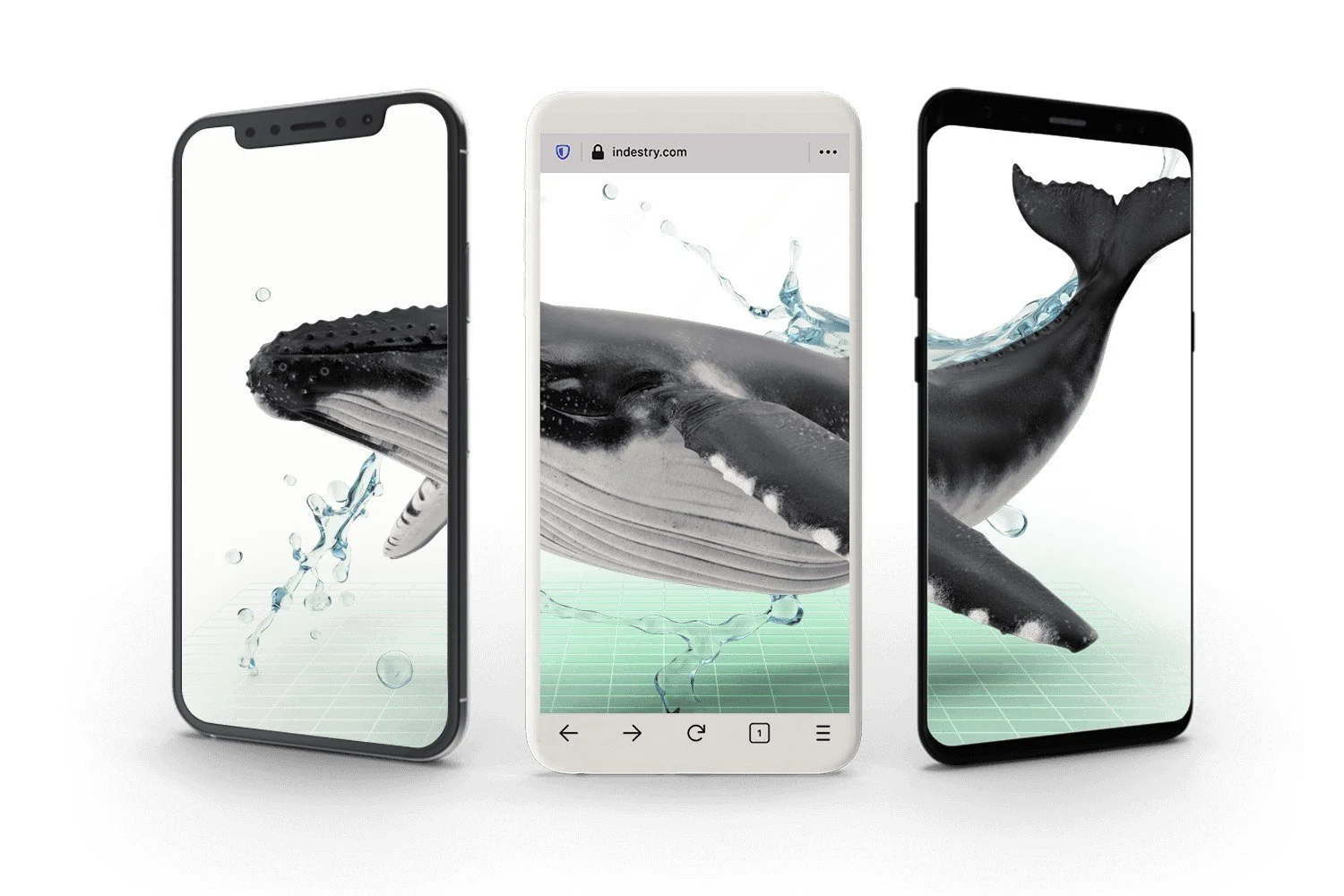
This layer delivers the response. Direct-view LED is bright, reliable, and works in daylight but is the most expensive per square foot. Projection covers large or irregular surfaces cheaply but needs controlled light. Mobile puts the output in the guest's hand, whether through a browser or a branded app that extends digital experiences beyond the visit, and headsets give the deepest immersion at the cost of throughput.
Data layer: content capture, CRM, and analytics
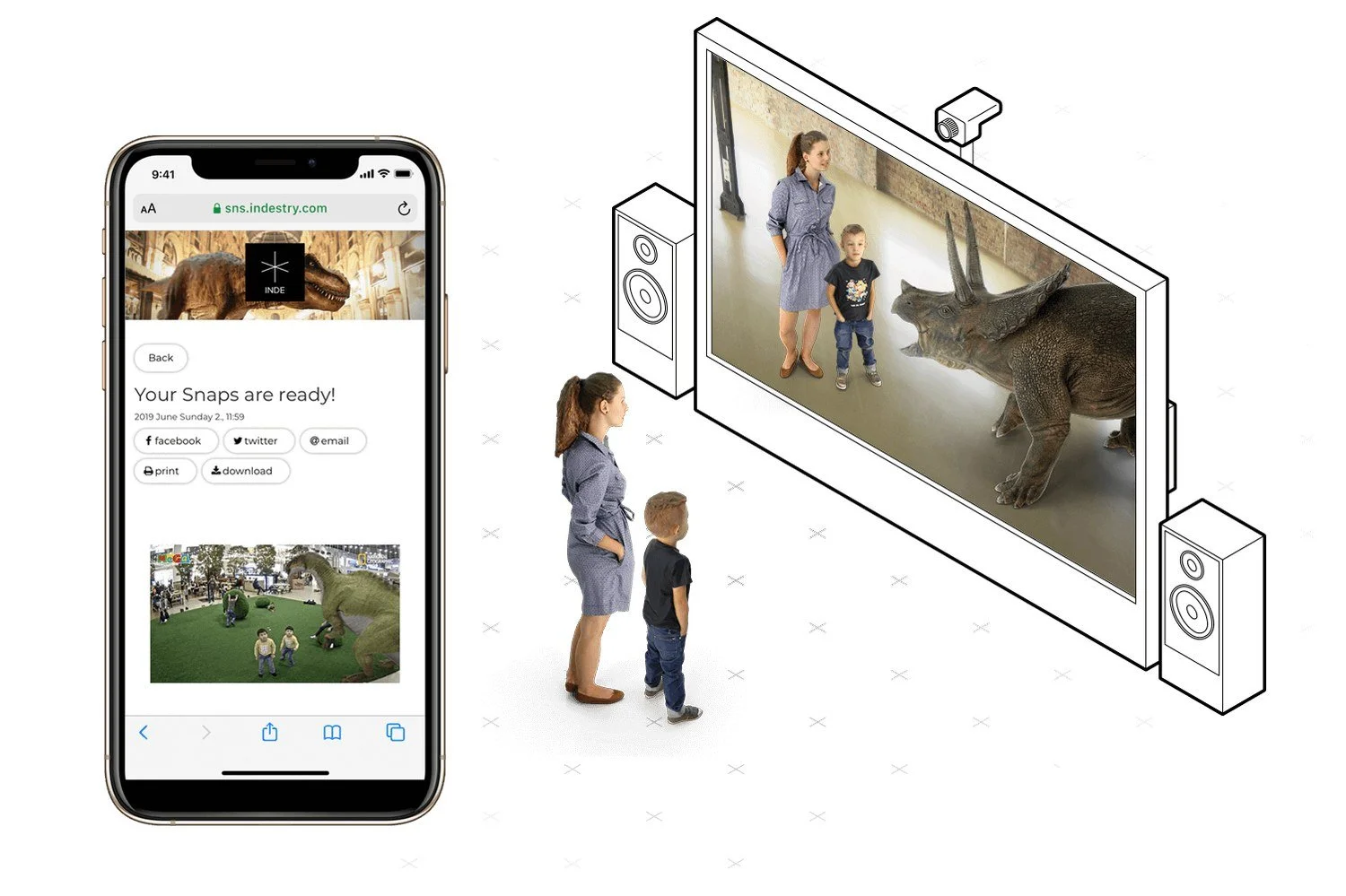
This is the layer most often left out of scope, and most often regretted later. It handles delivering photos and videos to guests through a branded landing page, capturing consented opt-ins, pushing customer data into a CRM, and reporting on sessions, completion, dwell, and real-time updates for internal teams. Without data capture, an installation is an attraction rather than a marketing asset.
Core Technologies Compared:
Every experiential build draws from a short list of underlying technologies, and most installations combine two or three of them rather than relying on one. The comparisons below weigh cost, control, and audience reach before those tradeoffs get locked in. The seven technologies below cover the building blocks most builds pull from.
Augmented reality: marker-based, markerless, and location-based
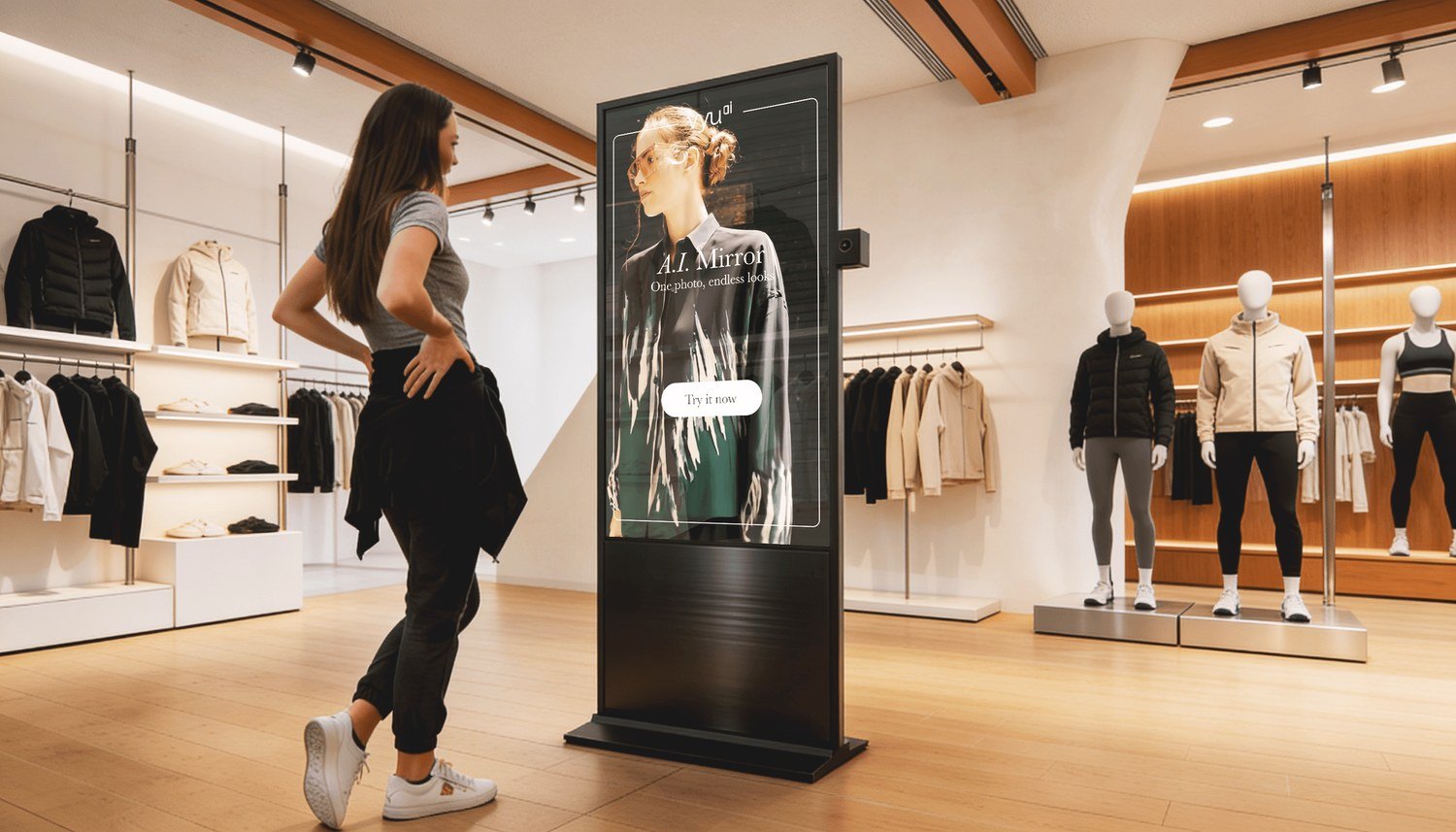
Marker-based AR triggers content from a printed marker, such as a QR code or a branded image, which makes it reliable and cheap and ties it to a physical object like packaging or signage, turning ordinary signage into an interactive experience. Markerless AR uses a device's understanding of the surrounding surfaces to place content anywhere, which is what furniture placement and virtual try-on rely on. The Vyu AI Try-On Mirror applies this same principle to virtual clothing try-on for fashion retail. Location-based AR anchors content to GPS coordinates or a scanned map of a venue, which suits wayfinding, campuses, and tours.
AR is the most accessible way to reach a large audience because the guest supplies the hardware. It is also the least controllable, because their device, lighting, and patience all vary.
Computer vision, body tracking, and pose estimation
Computer vision is the workhorse of venue-based experiential technology. Modern models track multiple people's skeletons in real time from ordinary cameras, which allows full-body interaction with no wearables, no controllers, and no phone. It supports groups, families, and crowds, which most other interaction methods do not.
This is also the layer that enables segmentation: cleanly separating a guest from their background so they can be composited into a scene. HeroMirror is built around this exact capability, compositing fans and shoppers into licensed-IP scenes at stadiums, cruise ships, and brand activations for an immersive experience. Segmentation quality is what separates a convincing result from an obvious green-screen effect, and it depends heavily on lighting.
Virtual reality and mixed reality
Headset experiences deliver unmatched immersion and unmatched operational overhead. Every guest needs a piece of wearable technology, a staff member, sanitation between uses, and three to five minutes. Throughput typically runs ten to fifteen guests per headset per hour, so these virtual experiences earn their place when the depth of the experience matters more than volume.
Projection mapping and large-format LED
Projection mapping fits content precisely to buildings, sets, or irregular objects and can cover enormous areas for a fraction of what LED would cost, though it requires darkness or near-darkness to read well. LED needs neither darkness nor throw distance and runs unattended for years, which is why permanent installations trend toward it despite the higher upfront cost. BroadcastAR runs on large-format displays for exactly this kind of venue, museum, and brand-activation work, where scale matters as much as interactivity.
Volumetric and holographic display
Volumetric capture records a person or object from many angles to produce a 3D asset that can be viewed from any direction and played back at life size. It is how brands deliver athlete or performer appearances without the person present, building an immersive experience around someone who never shows up. Capture is specialized and expensive; playback is comparatively simple.
RFID, NFC, and beacon technology
These identify a guest or object without a camera. An RFID wristband lets a guest's identity and preferences follow them across multiple stations, so a set of separate activations becomes one connected experience with a single data record. It isn't glamorous, but it is often the highest-return line item in a multi-station footprint.
Generative AI for personalized content
Real-time generative models let an experience produce content unique to each guest, from a stylized portrait to a story built around their inputs, which raises the perceived value of the takeaway asset and deepens brand engagement. The Vyu AI Try-On Mirror applies this same category of model to virtual clothing try-on for fashion retail and pop-up activations. Plan for content moderation, latency, per-session compute cost, and clear disclosure about how guest images are used.
Which Technology Fits Which Venue
Bright daylight environments such as concourses, atriums, and outdoor footprints push you toward LED and computer vision. Controllable dark spaces such as museums, art galleries, and purpose-built rooms open up projection. High-throughput environments such as trade show floors favor camera arrays over wearables, while low-throughput, high-value environments such as executive briefing centers can justify headsets.
Matching Technology to the Objective:
The right technology mix depends less on what's available and more on what the activation is supposed to accomplish. An experiential marketing campaign optimized for foot traffic looks nothing like one optimized for lead capture, even if both use a camera and a screen and target the same specific audiences. The five objectives below cover the most common starting points for that conversation.
Awareness and foot traffic
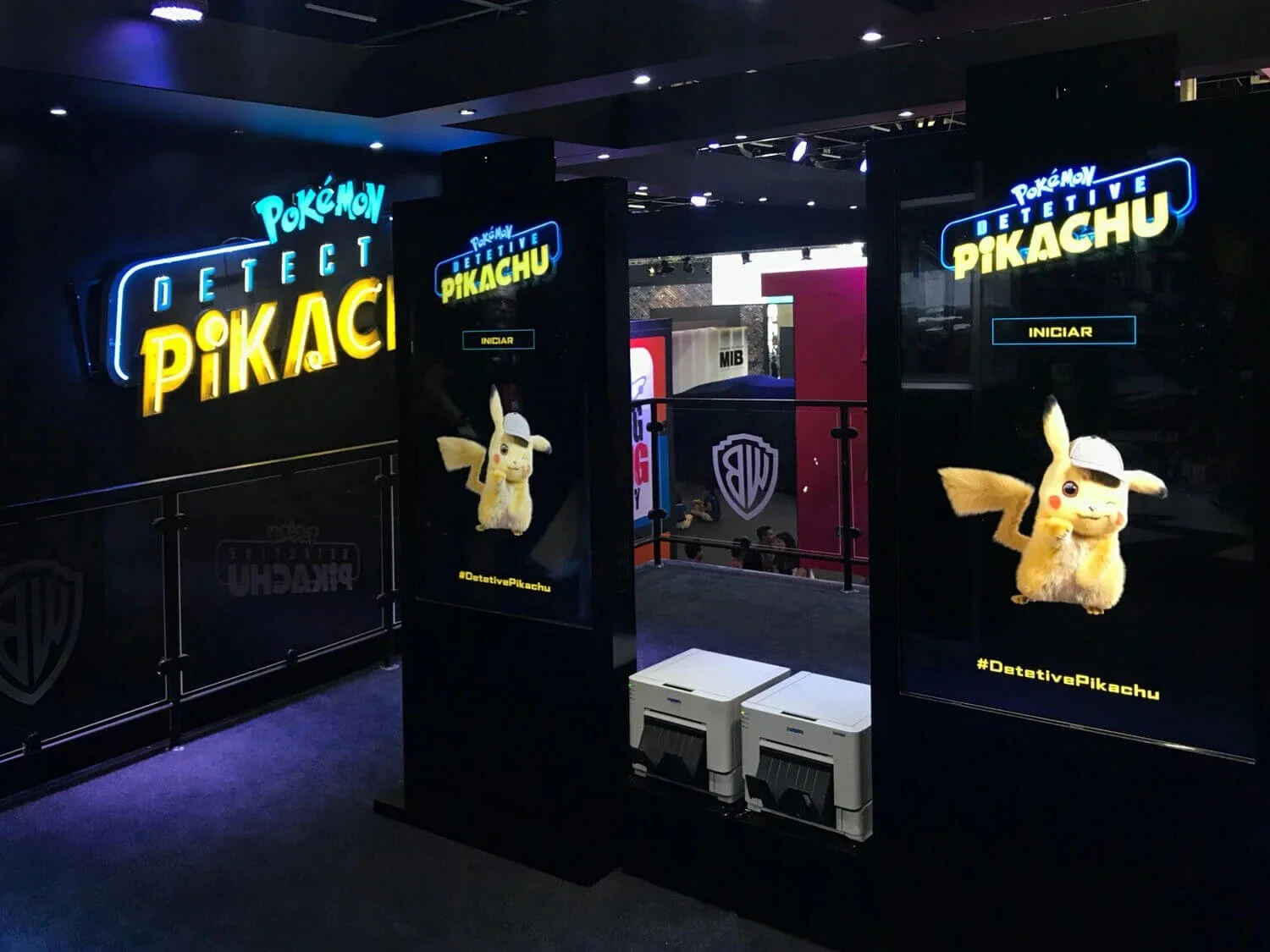
You need scale, brightness, and visibility from a distance. Large-format LED or projection paired with full-body computer vision interaction performs best, because passers-by can see other people using it, which cuts through digital ads guests already tune out and is often the clearest early sign of event success.
Product education and demonstration
You need clarity and control over pacing. Touch interfaces, AR product overlays, and product experts guiding an interactive demo work better here than spectacle, because the guest needs to absorb information rather than react. Immersive product demos succeed when they slow a guest down instead of rushing them through.
Lead capture and first-party data
You need a takeaway the guest genuinely wants in exchange for their contact information. Photo and video experiences, personalized generative content, and competitive leaderboards all create a natural reason to provide an email address that sales teams can follow up on directly. The best of these also build an emotional connection the guest remembers after a sales team's first call.
Dwell time and repeat visitation
You need depth and variability. Multi-station sequences, RFID-linked progression, leaderboards, and content that changes over time all extend how long guests stay and how often they return.
Earned media and user-generated content
You need an output that looks impressive on social media. Prioritize the quality of the delivered asset over the sophistication of the interaction, and make social sharing the easiest step in the flow.
Productized Experiences vs. Custom Builds:
Not every activation needs to be built from scratch, and deciding early which path fits a given brand experience saves budget and timeline. The right call usually comes down to how proven the format is, how much time is available, and whether the budget is fixed or flexible. The three paths below cover the off-the-shelf, custom, and hybrid routes most brands choose between.
When an off-the-shelf product is the better investment
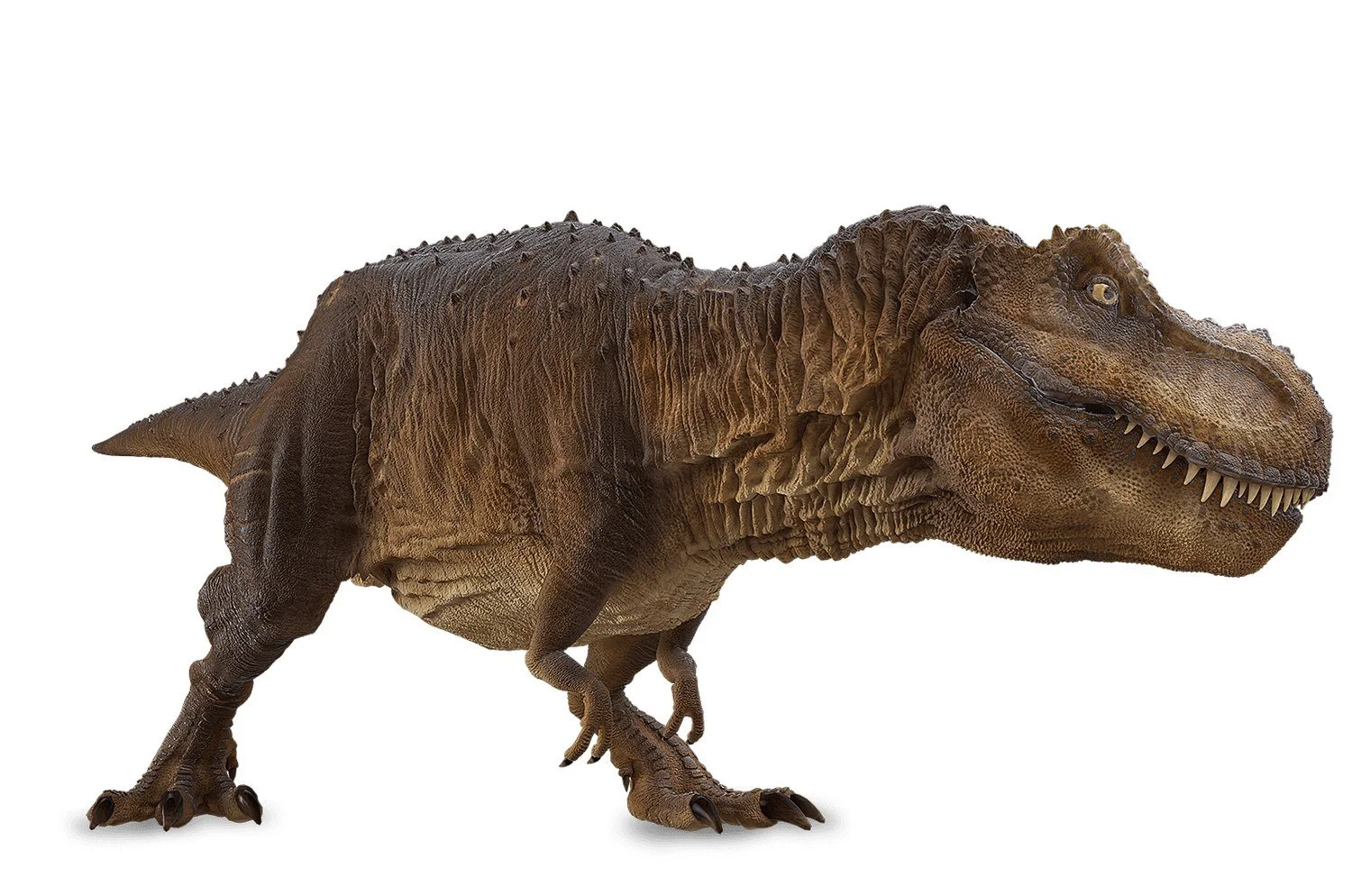
Choose a productized experience when the format is already proven, the timeline is under two months, the budget is fixed, or the same brand activation needs to replicate across many locations. Off-the-shelf content packages for BroadcastAR, including dinosaur, ocean, and Arctic themes, are built for exactly this scenario: tested content ready to deploy without a custom build.
When custom development is justified
Choose custom when the interaction itself is the differentiator, when integration with proprietary data or existing systems is required, when the physical space is unusual enough that no standard product fits, or when the installation is permanent and costs amortize over years.
The hybrid approach: custom content on a proven platform
Most of the best-value work sits here. The underlying platform, covering tracking, segmentation, capture, delivery, and analytics, is proven and reused. The content, branding, and interaction design are built specifically for the brand, creating an immersive experience that gives guests differentiation where they notice it and reliability where they do not.
Practical Constraints to Plan For:
A concept that looks perfect on a mood board can fail for reasons that have nothing to do with creative, and the brand experience suffers regardless. Lighting, power, throughput, and accessibility all eliminate options long before anyone talks about screens or cameras. Walking through these constraints early avoids designing something the venue can't support.
Lighting, floor space, and sightlines
Lighting affects more experiential concepts than budget does. Camera-based segmentation degrades in mixed or changing light, and projection washes out entirely in bright rooms. Measure the light in the space at the time of day before locking a concept, then confirm there's floor depth for the interaction and clear sightlines so passers-by can see it working.
Power, networking, and bandwidth
Large LED and multi-machine installations have real electrical requirements that many venues cannot supply without additional circuits. Cloud-dependent features need reliable bandwidth, which venue wifi rarely provides during a packed event. Design for graceful degradation when the network drops.
Throughput, queueing, and session length
Throughput is the constraint most often discovered too late. Divide 3,600 by the session length in seconds, multiply by station count, and compare the result to expected traffic. If the math doesn't work, shorten the session or add stations rather than trying to solve it with queue management.
Accessibility and inclusive interaction design
Gesture interactions must work for seated guests and for a range of heights and mobility. Provide captions for audio content and adequate contrast for low vision. Skin-tone and body-type performance in tracking models should be tested, not assumed, because training-data bias shows up in exactly this kind of deployment.
Privacy, consent, and image rights
Any camera-based experience captures personal data and, in some jurisdictions, biometric data with specific legal requirements. Decide what gets stored, for how long, and where. Post clear signage, collect explicit consent for any use beyond delivering the guest's own asset, and default to processing on the local device wherever possible.
Durability and unattended operation
A permanent installation will be used by the public for years without a technician present. Specify commercial-grade hardware, remote monitoring, automatic recovery on power loss, scheduled restarts, and physical protection for anything within reach. The cheapest hardware becomes the most expensive line item over a three-year deployment.
Budgeting and Total Cost of Ownership:
The sticker price of an installation is rarely the number that matters most over its lifetime. Rental terms, content refreshes, staffing, and support agreements all shape what an activation costs a brand once it's running. The four areas below are where budgets most often go wrong after the install is live.
Buy, rent, or subscribe
Rent for single events and short campaigns. Buy for permanent installations where the payback period is clear. Subscription and licensing models suit software-led experiences needing ongoing content refreshes, converting an unpredictable capital request into a predictable operating line.
Content refresh and seasonal updates
Guests stop engaging with content they've already seen. Budget for refreshes from the beginning, typically two to four per year for a permanent installation. An installation with a content plan holds engagement and delivers measurable results; one without it becomes furniture within a season, undermining experiential marketing success.
Installation, staffing, and on-site support
For event deployments, staffing and logistics often exceed the technology cost. For permanent installations, factor in installation labor, venue coordination, training for staff and team members, and a support agreement with defined response times.
Warranty, monitoring, and remote diagnostics
Remote monitoring pays for itself the first time it catches a failed sensor before a guest does. Ask specifically what is monitored, who receives the alert, the response-time commitment, and what happens after the warranty period ends.
How to Evaluate an Experiential Technology Partner:
The technology comparisons above only matter if the technology partner building the installation can deliver it reliably. A sizzle reel says nothing about what happens on opening night when something goes wrong. The three questions below separate a partner with real operating history from one with only a good highlight reel.
In-house engineering vs. subcontracted development
Ask directly whether the software will be written by employees or subcontractors. Subcontracting isn't disqualifying on its own, but it changes who can be reached at 6 p.m. on opening night and who maintains the code in year two.
Who owns the software and the content
Get ownership and licensing in writing before signing. Common structures range from full assignment to a perpetual license for the brand's use only, and any can be reasonable. Discovering which one was agreed to during a redeployment is not.
Proof of uptime, not just proof of concept
Sizzle reels prove that something worked once with a film crew present. Ask instead for a comparable deployment that has run for a year, its uptime, how many guests it served, and what broke, whether it was a full HeroMirror install or a single capture pod. A fleet-wide HeroMirror rollout across the Celebrity Cruises and Royal Caribbean fleets is the kind of multi-year, multi-ship answer that question deserves, and partners with real operating history will answer it comfortably.
Frequently Asked Questions
What is the most cost-effective experiential technology to start with?
For most brands, it's a camera-based photo or video experience on existing screen hardware, sometimes triggered by a QR code, with email delivery and analytics. It's inexpensive relative to the category, produces shareable content and consented opt-ins, and gives real participation data to justify a larger build.
How long does a custom experiential build take?
Software-only builds on proven hardware typically take six to ten weeks, while projects involving fabrication or new hardware run three to six months. Venue approvals and permits are frequently what sets the real timeline, not development.
Does experiential technology require special hardware for guests?
Most experiential technology asks nothing of the guest: camera-based venue experiences and WebAR both run without extra hardware, using existing screens or a guest's own phone browser through platforms like MobileAR. Only VR and mixed reality require issuing headsets, which is why they suit low-volume, high-value settings instead of high-traffic venues.
Can you measure ROI on experiential technology?
ROI on experiential technology can be measured by dividing total program cost by completed interactions to get a cost per meaningful interaction, then comparing that figure against paid media cost for a similar reach. Add the value of consented opt-ins captured and earned impressions from shared content, both of which can be priced against what they would otherwise cost.
Build the Right Experiential Technology Stack
The right experiential marketing technology is whatever survives the objective, the venue's lighting, the throughput requirement, and the support capacity behind it. That's usually a shorter list than it first appears, which means the decision is workable once the constraints are on the table. Indestry designs AR and computer vision experiences, including HeroMirror, Vyu AI, and BroadcastAR, for brands ready to build one.